
Winter has a habit of exposing all the small problems around a house that were easy to ignore during summer. Unfortunately, it is also the time when heating engineers, plumbers and roofers can suddenly become difficult to get hold of.
Sorting out a few things during autumn can make the difference between a straightforward repair and an expensive emergency call-out in January. Other jobs, particularly those indoors, can actually be easier to arrange once winter is under way.
Get the heating sorted first
If your boiler has not been serviced within the past year, autumn is a good time to book it in. Heating engineers become much busier as soon as the weather turns cold, and broken boilers will understandably take priority over routine servicing. A service can also pick up smaller problems before they turn into breakdowns. Depending on your boiler, regular servicing may also be required to keep the manufacturer’s warranty valid.
Anyone working on a gas boiler must be registered with Gas Safe. It is worth checking the engineer’s ID card, including the details on the back, to make sure they are qualified to work on the type of appliance you have.
While the heating is being checked, look at the radiators too. Cold patches, falling system pressure or radiators that need bleeding are much easier to deal with before the house actually depends on them every day.
Some of us have learned this the hard way a few winters ago, when a minor boiler fault became a much bigger problem simply because every local heating engineer was already booked solid.
Check the roof, gutters and chimney
Small roof problems rarely improve by themselves. A slipped tile, damaged flashing or crumbling pointing may be a relatively simple repair on a dry autumn day. Leave it until driving rain finds the gap and you could also be dealing with damaged plaster, ceilings or insulation.
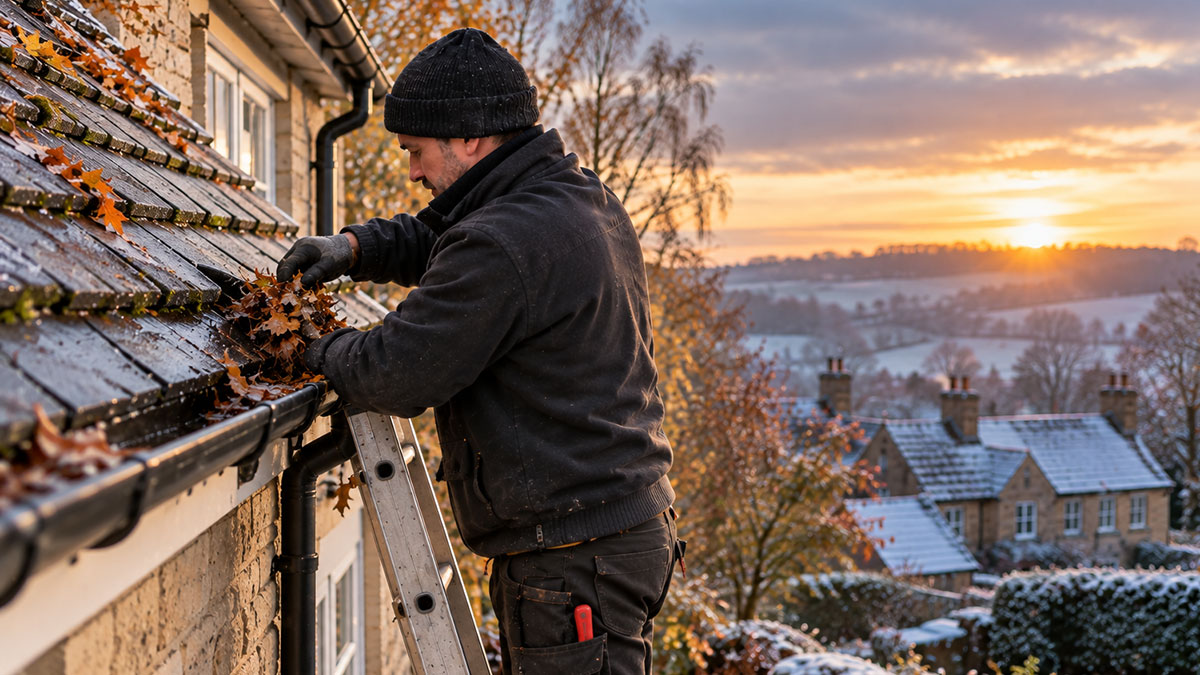
Gutters deserve attention as well. Once most of the autumn leaves have fallen, clearing them can prevent overflowing water running down walls or collecting where it should not. Clearing gutters is one of those jobs that never feels urgent until you see rainwater pouring down the outside wall instead of through the downpipe.
If you have an open fire or wood-burning stove, arrange to have the chimney swept before it starts getting regular use. How often it needs sweeping will depend on the appliance, fuel and amount of use, but leaving it until the middle of winter is rarely convenient.
Protect pipes and stop draughts
Exposed water pipes in lofts, garages and outbuildings are particularly vulnerable during prolonged cold weather. A plumber can insulate them, check outside taps and isolating valves and, if necessary, show you exactly where the main stopcock is.
That last point sounds obvious until there is water pouring through a ceiling and nobody can remember where the supply turns off.
Autumn is also a good time to tackle draughts. Gaps around doors and windows, badly fitting loft hatches and other small leaks can make a surprising difference to how comfortable a room feels. Many of these are inexpensive jobs for a carpenter or general handyperson.
Some outside jobs are better left alone
Not every job should be squeezed in before Christmas. Bricklaying, rendering and repointing all become more difficult as temperatures fall. Mortar needs suitable conditions to cure properly and frost can damage new work. Exterior painting also needs reasonably dry, mild weather if the finish is going to last.
The same applies to many concrete, driveway and landscaping jobs. There will sometimes be suitable weather windows during winter, but if the work is not urgent it can make more sense to wait for spring.
Be particularly cautious if someone is keen to carry out weather-sensitive work when conditions are obviously unsuitable. A reputable tradesperson should be prepared to postpone a job if the weather is likely to compromise the result. We have also found January a surprisingly good time to get smaller indoor jobs done. Once the Christmas rush is over, tradespeople can sometimes be noticeably easier to book.
Winter can be a good time for indoor work
The picture is very different indoors. Plastering, decorating, tiling, carpentry, electrical work and kitchen fitting can carry on throughout the winter without relying heavily on the weather.
There can also be an advantage in waiting until the rush before Christmas has passed. January and February are often quieter for some trades, which may mean better availability and more choice over start dates.
It is also a useful time to start thinking about bigger projects. Getting surveys and quotes organised during winter can put you in a better position to secure a good tradesperson for work beginning in spring.
Know what a reasonable quote looks like
Whatever time of year you are hiring someone, try to get several written quotes and make sure you are comparing the same scope of work.
The cheapest figure is not automatically the best value, but knowing roughly what tradespeople charge in your part of the country gives you something useful to work from. It helps you judge whether a higher quote reflects the complexity of the job, local demand or simply an unusually high price.
Our regional rate tables cover fifteen trades across the UK and provide a useful benchmark before you start asking for quotes.